The morning our family landed in Delhi, my nine year old son Arjun asked the question that would define our week in India: “Mom, how many kings lived here?” Standing in the chaos of Indira Gandhi International Airport, surrounded by colorful saris and the aromatic blend of spices and incense, I smiled and replied, “Enough to fill a whole history book, beta. We’re about to meet them all.”
Our Golden Triangle adventure through Delhi, Agra, and Jaipur would take us through five centuries of Mughal and Rajput history, and somehow, we had to make it engaging for a nine year old, a twelve year old daughter named Mira, and two parents who hadn’t studied Indian history since school.
Spoiler alert: India’s monuments tell their own stories. You just have to listen.
Day One: Delhi’s Grand Introduction
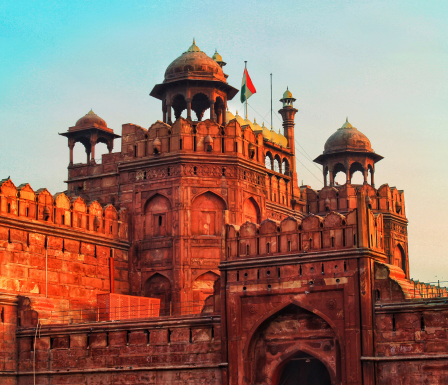
We started our Golden Triangle journey at the Red Fort, arriving at 9 AM when the sun was still manageable and crowds were thin. The moment we passed through Lahori Gate, Arjun’s eyes widened. “It’s like a whole city inside!” he exclaimed, and he wasn’t wrong.
Our guide, Rajesh, had the gift of making history come alive. He explained how Emperor Shah Jahan built this fort in the 17th century, and suddenly the red sandstone walls weren’t just old buildings but the home of powerful emperors who ruled an empire. When Rajesh described how the emperor would appear at the Diwan-i-Khas marble balcony to greet his subjects, Mira immediately climbed the platform, pretending to wave regally at her “subjects” below.
“Your majesty looks very convincing,” my husband Vikram laughed, snapping photos that would later become our family’s favorite memories.
From the Red Fort, we walked to Jama Masjid, one of India’s largest mosques. The girls had to cover their heads and we all removed our shoes before entering. The vast courtyard, capable of holding 25,000 worshippers, felt like an open sky cathedral. Arjun counted the domes “one, two, three” and marveled at the intricate marble work.
The afternoon brought us to India Gate, where we joined local families picnicking on the lawns. The children ran freely while Vikram and I relaxed under the shade, eating kulfi ice cream from a nearby vendor. This unplanned moment, watching our kids play cricket with local children who spoke limited English but universal childhood language, became one of our trip’s treasures.
Dinner that evening introduced our family to proper North Indian cuisine. At a restaurant Rajesh recommended, we ordered butter chicken, dal makhani, and fresh naan. Mira, usually picky about food, declared butter chicken “better than anything we have at home.” Arjun struggled with the spice levels but discovered raita’s cooling magic.
Day Two: The Taj Mahal Dream
Our 6 AM departure from Delhi to Agra tested everyone’s commitment to this adventure. Three hours later, driving through Uttar Pradesh’s countryside with Bollywood music playing, both kids asked repeatedly, “Are we there yet?”
But arriving at the Taj Mahal erased all travel fatigue. We’d seen countless photos, but nothing prepares you for the real thing. As we walked through the main gateway and the white marble monument revealed itself in the morning light, even Arjun fell silent.
“Dad, why did the king build this?” Mira asked.
Vikram knelt beside her, pointing at the intricate details. “Emperor Shah Jahan built it for his wife Mumtaz Mahal, who he loved very much. When she died, he wanted to create something so beautiful that everyone would remember their love forever.”
That simple explanation made the Taj Mahal more than just a monument. For the next two hours, we explored the gardens, walked along the reflecting pools, and marveled at the precision of the inlay work. Rajesh showed us how the white marble changes color throughout the day, and explained that 20,000 workers spent 22 years building it.
Arjun’s favorite detail was the acoustics inside the main chamber. He whispered “hello” and heard it echo back, giggling every time. Mira spent ten minutes examining the precious stone inlays, trying to identify each semi-precious gem embedded in the marble.
The afternoon visit to Agra Fort provided historical context. From the fort’s balconies, we could see the Taj Mahal in the distance. Rajesh explained how Shah Jahan, imprisoned here by his own son, spent his final years gazing at his wife’s tomb across the river. This tragic detail captivated both children, who suddenly understood that history wasn’t just dates and buildings but real people with real emotions.
We ended our Agra day at Mehtab Bagh, a garden across the Yamuna River offering sunset views of the Taj Mahal. As the white marble turned golden, then pink in the fading light, our family sat together on the grass, watching one of the world’s most beautiful monuments change colors like a chameleon.
Day Three: Journey to the Pink City
The drive from Agra to Jaipur included a crucial stop at Fatehpur Sikri, Emperor Akbar’s abandoned capital. The red sandstone city, perfectly preserved but uninhabited, felt like a ghost town from history. The children loved exploring the massive courtyards and imagining what life was like when thousands of people lived here.
“Why did everyone leave?” Arjun asked.
“Water shortage,” Rajesh explained. “The emperor built this beautiful city, but there wasn’t enough water to support everyone, so they had to move.”
A valuable lesson about planning and resources, delivered through crumbling palaces instead of textbooks.
Arriving in Jaipur that evening, the Pink City lived up to its name. Buildings painted in terracotta pink lined the streets, creating a uniform beauty unlike any other Indian city. We checked into a heritage hotel that was once a noble’s mansion, giving the children their first taste of royal living.
Day Four: Amber Fort and Royal Splendor
Jaipur’s Amber Fort sits atop a hill overlooking Maota Lake, and we had the option of reaching it by elephant or jeep. The children voted unanimously for elephant rides. Swaying gently on the elephant’s back as it climbed the hillside path became an adventure story they’d retell for months.
The fort itself was a maze of courtyards, palaces, and mirror work chambers. In the Sheesh Mahal, the mirror palace, Rajesh lit a match to show how thousands of tiny mirrors reflected light throughout the chamber. “Imagine this room lit with hundreds of candles,” he suggested, and suddenly we could visualize royal parties from centuries past.
The afternoon brought us to Jaipur’s city center for the Hawa Mahal, the Palace of Winds. Its facade, with 953 small windows, reminded Mira of a honeycomb. Rajesh explained how royal women watched street festivals from behind these windows, observing public life while maintaining privacy according to the customs of their time.
At the City Palace, still partially home to Jaipur’s royal family, we toured museums displaying royal clothing, weapons, and miniature paintings. Arjun was fascinated by the weapons collection, while Mira loved the intricate textile work on ceremonial dresses.
Jantar Mantar, the astronomical observatory, surprised us all. The massive instruments built in the 1720s for studying stars and planets looked like abstract art sculptures but were actually precise scientific tools. Our guide demonstrated how the sundial accurately told time, impressing even Vikram with the mathematical precision of centuries past.
Day Five: Colors, Crafts, and Farewells
Our final morning in Jaipur was dedicated to experiences rather than monuments. We visited a block printing workshop where artisans demonstrated traditional fabric printing techniques. Both children tried their hands at stamping designs on cloth, creating personalized souvenirs to take home.
At a local cooking class, a Rajasthani grandmother taught us to make dal baati churma, a traditional dish. Mira kneaded dough for the baati while Arjun helped measure spices. The meal we prepared together, eaten sitting on cushions on the floor, tasted better than any restaurant food simply because we’d made it ourselves.
Our last evening brought us to Nahargarh Fort for sunset. From the ramparts, Jaipur spread below us like a pink carpet, its palaces and forts dotting the landscape. As the sun descended, painting everything in golden light, I watched my family’s faces reflecting wonder and satisfaction.
The Journey Home: Lessons Beyond Textbooks
Flying back from Delhi two days later, I asked both children what they’d remember most. Mira said, “The love story behind the Taj Mahal.” Arjun said, “Riding elephants up to the fort!” Both answers were perfect.
The Golden Triangle had delivered history, culture, architecture, and adventure in equal measure. But more importantly, it taught our children that learning happens everywhere, not just in classrooms. That the past connects to the present through buildings, stories, and traditions. That different cultures create beauty in different ways, and all deserve appreciation.
Vikram summed it up best: “We came here to see palaces and monuments. We’re leaving with stories to tell and perspectives to share.”
India’s Golden Triangle works perfectly for families willing to embrace its chaos, heat, history, and heart. Yes, it requires patience. Yes, the crowds and heat challenge comfort zones. But watching your children’s eyes light up when they understand how inlay work is done, or why someone would spend 22 years building a monument to love, makes every challenging moment worthwhile.
Essential Family Tips:
Pack modest clothing for temple visits and comfortable walking shoes for monument exploration. Book guides who specialize in family tours as they know how to make history engaging for children. Allow flexibility in itineraries for rest time as the heat and walking can exhaust young travelers. Bring reusable water bottles and stay constantly hydrated. Most importantly, let children lead occasionally, following their interests rather than rigidly sticking to plans.
Ready to create your own Golden Triangle family adventure? Contact Musaafar’s India specialists to design a personalized itinerary balancing historical education with cultural experiences perfect for families seeking meaningful travel beyond typical tourism.